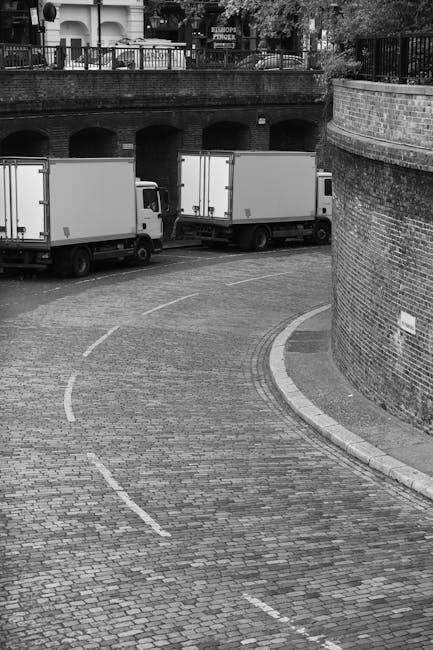
Access problems for Kingston small van removals on narrow streets
Posted on 11/06/2026

If you have ever tried to move a sofa, mattress, or a stack of boxes down a tight Kingston road, you will know the feeling: the van looks small on paper, but the street suddenly feels much smaller in real life. Access problems for Kingston small van removals on narrow streets are one of those moving issues that can turn a straightforward job into a careful bit of logistics. The good news? With the right planning, a small van can be exactly the right tool.
This guide breaks down the practical side of narrow-street removals in Kingston, from loading strategies and parking constraints to timing, safety, and how to avoid the usual headaches. Whether you are moving from a flat, a student room, a terraced house, or a property near busier central roads, the aim is simple: help you get from A to B without drama. Because let's face it, moving day has enough drama already.
Why Access problems for Kingston small van removals on narrow streets Matters
Access is often the hidden factor that decides whether a move feels smooth or messy. In Kingston, that matters because many streets have a mix of older housing stock, terraced homes, compact side roads, flats above shops, shared driveways, and parking that disappears the moment you need it. A small van can solve some of that, but it does not erase the problem completely.
The real issue is not just van size. It is the whole chain of movement: where the van can stop, how far the team must carry items, whether stairwells are tight, whether there is a bend or pinch point at the corner, and whether another vehicle has half-blocked the road. One awkward detail can affect the schedule, the workload, and the risk of damage. That is why access planning deserves proper attention rather than a quick "we'll sort it on the day" attitude.
For local moves, the difference between a well-prepared small van job and a rushed one is often just 20 minutes of thinking in advance. That sounds small. It rarely is.
If you are comparing move types, it can help to look at broader options too. The pages on man with a van in Kingston upon Thames, man and van services, and flat removals in Kingston upon Thames are useful starting points if you are weighing up the most suitable move format.
How Access problems for Kingston small van removals on narrow streets Works
In practical terms, a small van removal works by reducing the vehicle footprint and making it easier to work in places where larger removal lorries would struggle. That might mean a narrower body, a shorter wheelbase, easier kerbside positioning, or a setup that allows quicker loading close to the property. In a narrow Kingston street, those details can make a real difference.
The process normally starts with an access review. A good mover will want to know the exact street, whether the property is on a bend, whether there is a low tree canopy, if there are resident bays, and whether the front door opens directly onto the pavement or behind steps. They may also ask about item sizes, especially if you have bulky furniture that needs a bit of angle-and-pivot manoeuvring. That is not fussiness. It is sensible planning.
On the day, the team will usually make a quick on-site assessment before unloading. Sometimes the best solution is to stop a little further away and use trolleys or extra carrying runs. Sometimes there is a better loading point around the corner. The point is to adapt, not force the van into a space that creates avoidable risk.
For especially tight areas or properties that need flexible booking, you may also want to look at removal van options and removal services in Kingston upon Thames. Those pages can help you understand the kind of support that fits a more awkward access setup.
Key Benefits and Practical Advantages
There is a reason small van removals are so often recommended for narrow streets. They are not just cheaper in some cases; they are often more workable. The main advantage is agility. A smaller vehicle can usually position itself more easily, reverse with less drama, and avoid the kind of street obstruction that makes neighbours sigh into their tea.
Another benefit is lower disruption. In busy residential roads, especially where parking is tight and traffic keeps filtering through, a small van can reduce the time spent blocking access. That can be especially helpful near flats, student lets, and mixed-use streets where there is little space to linger.
There is also a safety angle. Fewer awkward turns, less scraping against walls, and shorter carrying distances can all reduce the chances of damage. That matters for furniture, but also for the building itself. Hallway scuffs are a classic moving-day nuisance. Not glamorous, but very real.
For some moves, a small van also works well with split loads or storage planning. If your access is tight and your move is not all going in one day, combining a small van service with packing and boxes support or temporary storage can make the whole process feel less crowded and more controlled.
| Approach | Best for | Access advantage | Main limitation |
|---|---|---|---|
| Small van removal | Narrow streets, flats, light-to-moderate loads | Easier kerbside positioning and better manoeuvrability | May need multiple trips for larger moves |
| Man and van | Smaller moves, quick local transport, single items | Very flexible in tight access areas | Less suited to full-house volumes |
| Full removals service | Larger households, more furniture, full packing | More manpower for carry and loading | Larger vehicles may struggle on narrow streets |
Who This Is For and When It Makes Sense
This kind of setup makes sense for a lot of Kingston residents. If you live in a flat above street level, a terrace with no drive, a converted house with a narrow front path, or a property near a tight turning point, a small van is often the practical choice. Students moving between shared houses usually find it helpful too, especially when the move is local and the load is mostly boxes, small furniture, and personal items.
It is also a strong option for people moving one or two larger items rather than a whole household. A chest of drawers, a bed base, a dining table, or a piano can all raise access questions even when the overall volume is low. In those cases, the street matters almost as much as the item itself. You might not need a big removal lorry, but you do need a team that knows how to work in tight conditions.
To be fair, not every move on a narrow street needs a specialist setup. Some are straightforward once parking is sorted. But if your building has steps, no lift, and restricted stopping, the small van option often lands in that useful middle ground between "too much vehicle" and "not enough support".
For Kingston-specific move planning, the local guide on Kingston upon Thames removals in KT1 and the broader overview on house removals in Kingston upon Thames can be handy if you want to match your situation to the right type of service.
Step-by-Step Guidance
Here is the simplest way to approach access planning for a narrow-street move. Nothing fancy. Just the steps that save time and reduce stress.
- Measure the obvious stuff first. Check door widths, stair turns, hallway corners, and any low ceilings or banisters that could make carrying furniture awkward.
- Look at the street realistically. Is there legal stopping space? Can a small van pull in without blocking the road? Can it turn safely, or will it need a reverse out? This matters more than people expect.
- Match the load to the access. Heavy but compact items are different from large, awkward ones. A sofa can be harder to move than half a dozen boxes because shape matters.
- Pre-pack and label clearly. If the van has to stop a little farther away, tidy and clearly labelled boxes reduce the carrying hassle.
- Decide whether you need parking help. In many local moves, the first bottleneck is not the van size but the parking arrangement. Sort that early if you can.
- Share the awkward details up front. Tight alley? Shared courtyard? No lift? Say it early. It avoids the false optimism that ruins schedules.
- Build in a buffer. Give yourself a bit of extra time. Access problems have a habit of arriving in small ways, one after another.
A lot of moving headaches start when people understate access restrictions. If you think the job is straightforward, mention the corner staircase, the steep front steps, and the fact that the van may need to pause a little way down the road. That kind of honesty helps the whole move work better. Not a huge revelation, I know, but it saves grief.
If you are booking at short notice, the page on same-day removals in Kingston upon Thames may also be useful, especially when timing is tight and access needs quick judgement.
Expert Tips for Better Results
The best access solutions are usually the boring ones. Clear communication, realistic packing, and a route that has been checked before the van arrives. Still, there are a few practical tricks that make a big difference on narrow Kingston streets.
- Keep larger items accessible. Do not bury the most awkward furniture behind 20 boxes. It sounds obvious, then moving day happens.
- Protect edges before you move. Door frames, table corners, and stair rails are the first things to get knocked if the route is tight.
- Use smaller boxes for heavy contents. Books and kitchenware can become unpleasantly heavy in large boxes.
- Choose loading times carefully. Early mornings or quieter periods can be easier for stopping and carrying, especially where traffic is busy.
- Plan for the "second carry". If the van cannot park right outside, you will need a plan for short repeated runs. That is normal.
One small but useful detail: if your access route includes stairs or a courtyard, try to leave a bit of clear floor space near the entrance. It sounds like a tiny thing, but it can make the difference between a quick pivot and a clumsy shuffle. And nobody enjoys that shuffle.
You can also strengthen the move by choosing a provider with clear policies and transparent process pages, such as about us, insurance and safety, and terms and conditions. Those pages help set expectations before the van arrives at the kerb.

Common Mistakes to Avoid
Access problems are often made worse by a few predictable mistakes. The good news is that most are easy to avoid once you know what to watch for.
- Assuming a small van means no access issues. Small van, yes. Magic van, no.
- Forgetting to mention road restrictions. Narrow roads, resident bays, height restrictions, and one-way access all need to be discussed early.
- Overpacking large boxes. A box that is technically liftable can still be too awkward to carry down stairs.
- Leaving it to the last minute. Access planning works best before everything is boxed up and the kettle has been unplugged.
- Not checking furniture dimensions. Some items simply do not enjoy tight turns. Sofas especially have opinions.
Another common problem is not considering what happens if the van cannot wait directly outside. If there is no close stop, the team may need to carry items from a nearby loading point, and that can change the whole pace of the move. It is not a disaster, but it needs to be priced and planned properly.
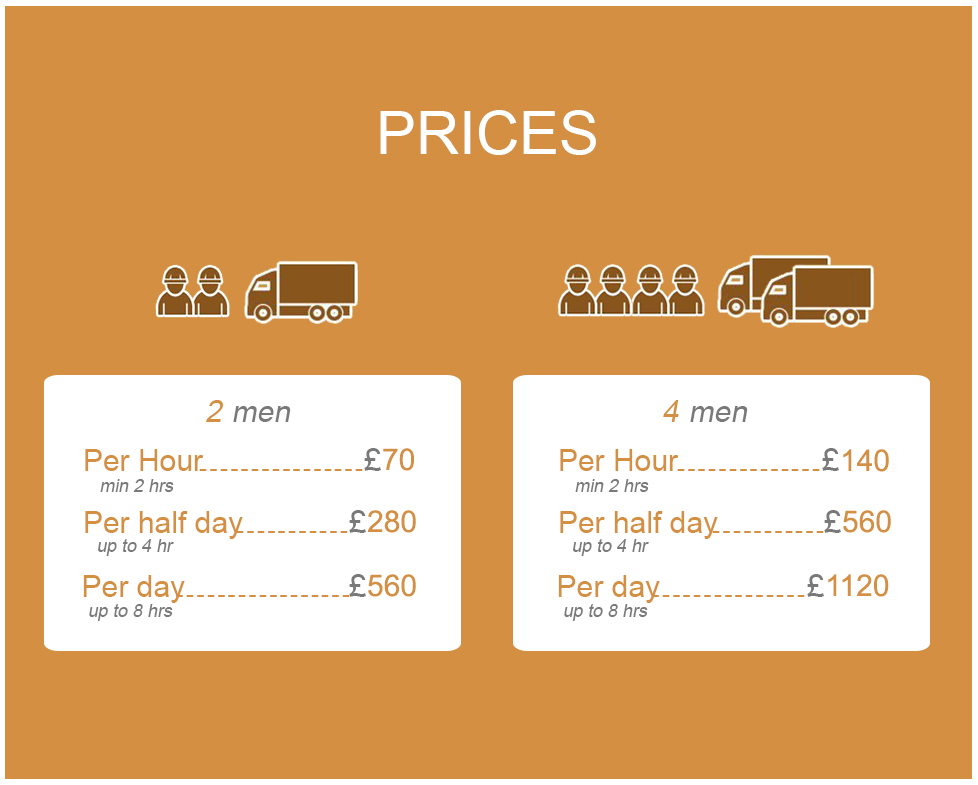
If you are unsure about budgeting, the pages on pricing and quotes and our prices are useful reference points for understanding how move complexity can affect the overall cost.
Tools, Resources and Recommendations
You do not need a van full of specialist kit to handle narrow-street removals, but a few practical tools really help. Dollies, furniture blankets, straps, and good packing materials can reduce the strain on both the team and the property. If the access route is awkward, equipment matters more than people realise.
For customers, the most useful resources are often simple: a tape measure, a rough street photo, a floor plan if you have one, and a clear list of furniture dimensions. If you can share those ahead of time, the mover can judge whether the route is workable and whether the van needs to park at a specific point.
A few website pages are also worth having in mind while you plan:
- removals in Kingston upon Thames for a broader service overview
- services overview if you want to compare move types
- storage options if you need to split the move
- furniture removals for heavier or awkward items
- piano removals if you are dealing with a particularly delicate load
And if the move involves a tight flat entrance, the page on flat removals is especially relevant. In practice, narrow streets and flat access tend to go together more often than people first expect.
Law, Compliance, Standards or Best Practice
For moving work in the UK, the main compliance issues are practical rather than dramatic: safe loading, sensible manual handling, proper vehicle use, and respect for parking or stopping rules. The exact requirements can vary by street, property type, and how the move is arranged, so it is always wise to treat access planning as part of safety planning, not just convenience planning.
Good practice usually includes checking that lifting routes are clear, that items are not carried in a way that causes avoidable strain, and that the van is parked legally and safely. Where access is tight, it is also sensible to agree how long loading may take and whether items need to be staged inside the property before moving out. That reduces congestion and makes the job more controlled.
Insurance and safety should not be an afterthought either. If a tight turn or cramped staircase increases the chance of knocks and scrapes, a professional approach should account for that from the start. The same goes for clear customer communication. If access is restricted, the mover should say so plainly rather than pretend it will all sort itself out. It rarely does.
For anyone wanting a better feel for the company's operating standards, the pages on health and safety policy, accessibility statement, and recycling and sustainability give a useful sense of the wider approach.
Options, Methods, or Comparison Table
Not every narrow-street move needs the same approach. Sometimes the question is not "small van or not?" but "which style of small van move suits this street best?" Here is a simple comparison to help you think it through.
| Method | Best used when | Strength | Trade-off |
|---|---|---|---|
| Direct kerbside loading | The van can stop very close to the property | Fastest and least physically demanding | Depends on parking and traffic conditions |
| Short carry from nearby stop | The street is too narrow for direct parking | Flexible and often realistic in Kingston | Slower and more tiring |
| Split-load approach | The move is larger than a single small van load | Useful where access is difficult but the move is time-sensitive | Requires more coordination |
| Storage-assisted move | Timing, access, or volume makes same-day completion awkward | Reduces pressure on the moving day | Requires extra planning and possible interim storage |
In real life, many Kingston moves use a mix of these methods. A couple of items might go straight on the van, while the awkward furniture takes a slower route. That is completely normal. The best choice is the one that fits the street rather than fighting it.
Case Study or Real-World Example
Imagine a couple moving from a first-floor flat on a narrow Kingston street with limited parking and a tight staircase. Nothing extreme, but enough to make a large removal lorry awkward. They have a bed, a sofa, a small dining table, boxes from the kitchen, and a few fragile items. The street is narrow enough that a bigger vehicle would struggle to wait without causing inconvenience.
The sensible plan is a small van with a clear loading window, early arrival, and pre-packed boxes. The couple measure the bulky items before the move and tell the team about the staircase turn, which has a slightly awkward landing. On the day, the van stops a short distance away rather than trying to wedge into a space that is technically possible but not sensible. That choice saves time, avoids neighbour frustration, and reduces the risk of damage.
The move is not effortless. It involves a few extra carries, and one box has to be repacked because it is too heavy. But it is controlled, predictable, and finished without the stress that often comes from overpromising on access. That is the real win: not perfect conditions, just a move that feels manageable.
For readers who live near busier local routes or areas with more complex parking, related Kingston guides like moves near Kingston Bridge in KT1, the Surbiton KT6 man and van guide, and packing and piano removals at Kingston Riverside and Canbury can add useful local context.
Practical Checklist
Use this before booking or on the run-up to moving day. It keeps the access side honest.
- Measure the widest furniture items and note any awkward corners.
- Check whether the van can park legally near the front door.
- Identify one-way streets, tight bends, or low-hanging obstacles.
- Confirm whether there are stairs, narrow landings, or no lift access.
- Pack heavy items into smaller boxes.
- Leave a clear route inside the property.
- Tell the mover about any restrictions before the booking is confirmed.
- Ask whether a small van, split load, or storage plan would be better.
- Keep valuables and essentials separate.
- Leave a little time buffer in case the van has to stop farther away than expected.
Quick expert summary: if your Kingston street is narrow, the winning move is rarely "hope for the best." It is usually a combination of accurate measurements, honest communication, smart packing, and the right vehicle size. That simple blend solves more problems than people think.
Get a free quote today and see how much you can save.
Conclusion
Access problems for Kingston small van removals on narrow streets are common, but they are very manageable when you plan for them early. The trick is to treat access as part of the move itself, not a side note. Once you know where the van can stop, how the items will be carried, and what the street is likely to throw at you, the whole job becomes more predictable.
A small van is often the best fit for Kingston's tighter roads, especially for flats, smaller households, student moves, and awkward single-item transport. It gives you flexibility without trying to force a large vehicle into a space that was never built for one. That alone can save time, reduce stress, and protect your furniture and building. And honestly, that is what most people want on moving day: a bit of calm, a bit of control, and no nasty surprises.
Take the time to plan the access properly, and the rest of the move usually starts to behave itself.